
Easy & Delicious Korean Beef Rice Bowls: A Recipe from the Heart
Welcome, friends, to The Artisan’s Ledger. Today, we’re not just making a meal; we’re crafting an experience. We’re diving into the vibrant flavors of Korea with a dish that’s both comforting and exciting: Korean Beef Rice Bowls. This isn’t just about following steps; it’s about understanding the heart of Korean cuisine and bringing that essence into your own kitchen. This recipe is inspired by the countless meals I shared with my grandfather, where simple ingredients were transformed into culinary masterpieces through patience and care.
Why You’ll Love These Korean Beef Rice Bowls
In a world of instant gratification, these rice bowls offer a delightful blend of speed and flavor. They’re ready in under 30 minutes, making them ideal for a weeknight dinner. But more than that, they’re a celebration of textures and tastes – the savory beef, the tangy kimchi, the crisp vegetables, all harmonizing beautifully over a bed of fluffy jasmine rice.
- Quick & Easy: Ready in under 30 minutes.
- Flavorful: A delightful blend of Korean spices and seasonings.
- Versatile: Easily customizable to your taste preferences.
- Balanced: A complete meal with protein, carbs, and vegetables.
Ingredients: The Foundation of Flavor
Each ingredient in this recipe plays a crucial role in creating the authentic Korean flavor profile. Let’s break them down:
- 1 tsp freshly grated garlic
- 1 tsp freshly grated ginger
- 3 tbsp all-purpose soy sauce
- 2 tbsp brown sugar
- 1 tbsp sesame oil
- 1 tbsp gochujang (adjust for spice preference, see note 1 for substitutions)
- 1 tsp rice vinegar
- 1 tbsp sesame seeds, plus extra to garnish
- 2 tbsp extra-virgin olive oil or neutral oil
- 500 g (1 lb) minced (ground) beef
- 2 spring onions (scallions), finely sliced, 1 tbsp reserved for garnish
- 3 tbsp whole-egg mayonnaise (see note 2 about dairy-free)
- 1 tsp gochujang
- ½ tsp sesame oil
- ½ tsp rice vinegar
- 2 cups (370 g) cooked jasmine rice
- 1 cup (240 g) kimchi
- 1 carrot, julienned
- 1 Lebanese (short) cucumber, sliced into half moons
Crafting the Perfect Korean Beef: Step-by-Step
Now, let’s embark on the journey of creating these delicious bowls. Remember, patience and attention to detail are key.
- Prepare the Stir-Fry Sauce: In a small bowl, whisk together the garlic, ginger, soy sauce, brown sugar, sesame oil, gochujang, rice vinegar, and sesame seeds until well combined. This sauce is the heart of the dish, so ensure all the flavors are harmoniously blended.
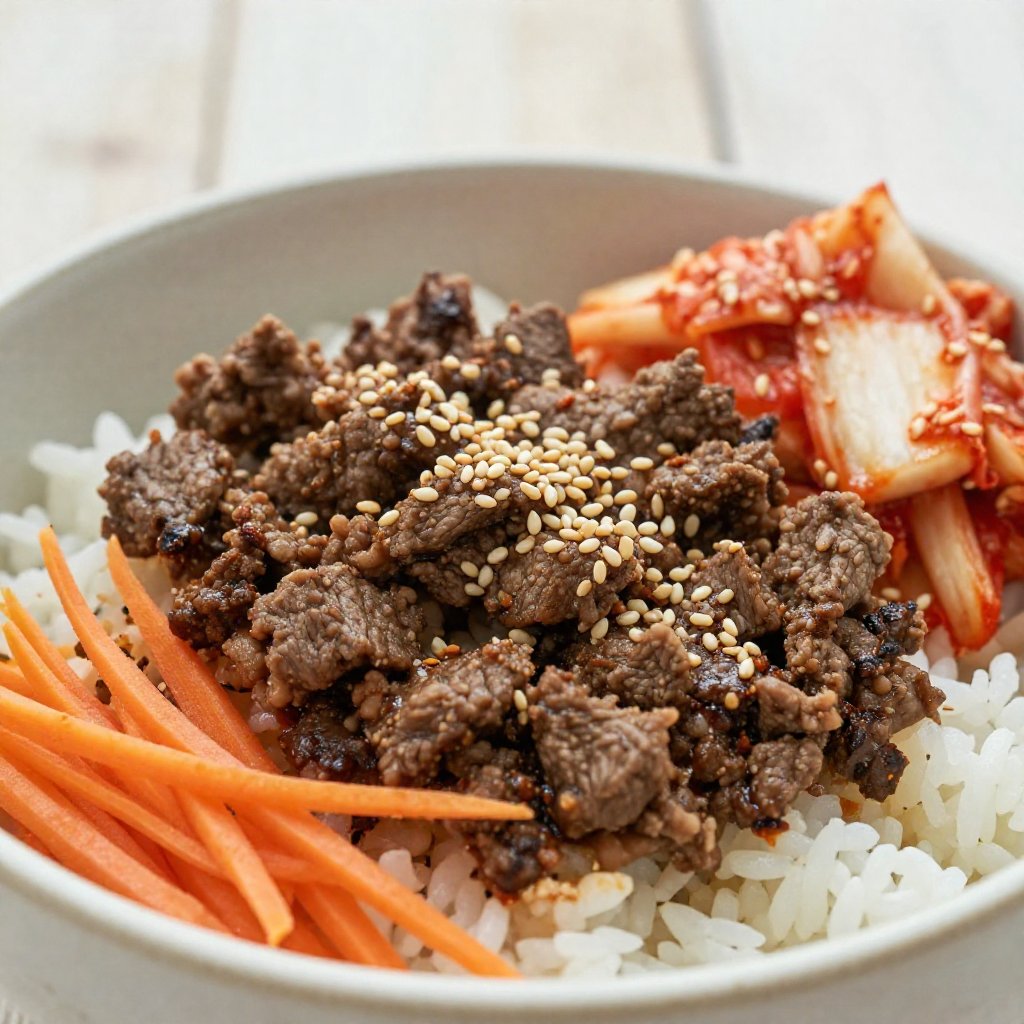
- Cook the Beef: Heat the oil in a large frying pan over medium–high heat. Add the minced beef and cook, breaking it up as it browns. We want the beef to be evenly cooked and slightly crispy.
- Simmer in Sauce: Pour the stir-fry sauce over the cooked beef and stir well to coat. Simmer for 2–3 minutes, allowing the sauce to thicken slightly. This step infuses the beef with the rich Korean flavors.
- Add Spring Onion: Turn off the heat and stir through the finely sliced spring onion. This adds a fresh, vibrant touch to the beef mixture.
- Prepare the Gochujang Mayo: In a small bowl, whisk together the mayonnaise, gochujang, sesame oil, and rice vinegar until smooth. This creamy, spicy sauce is the perfect complement to the savory beef.
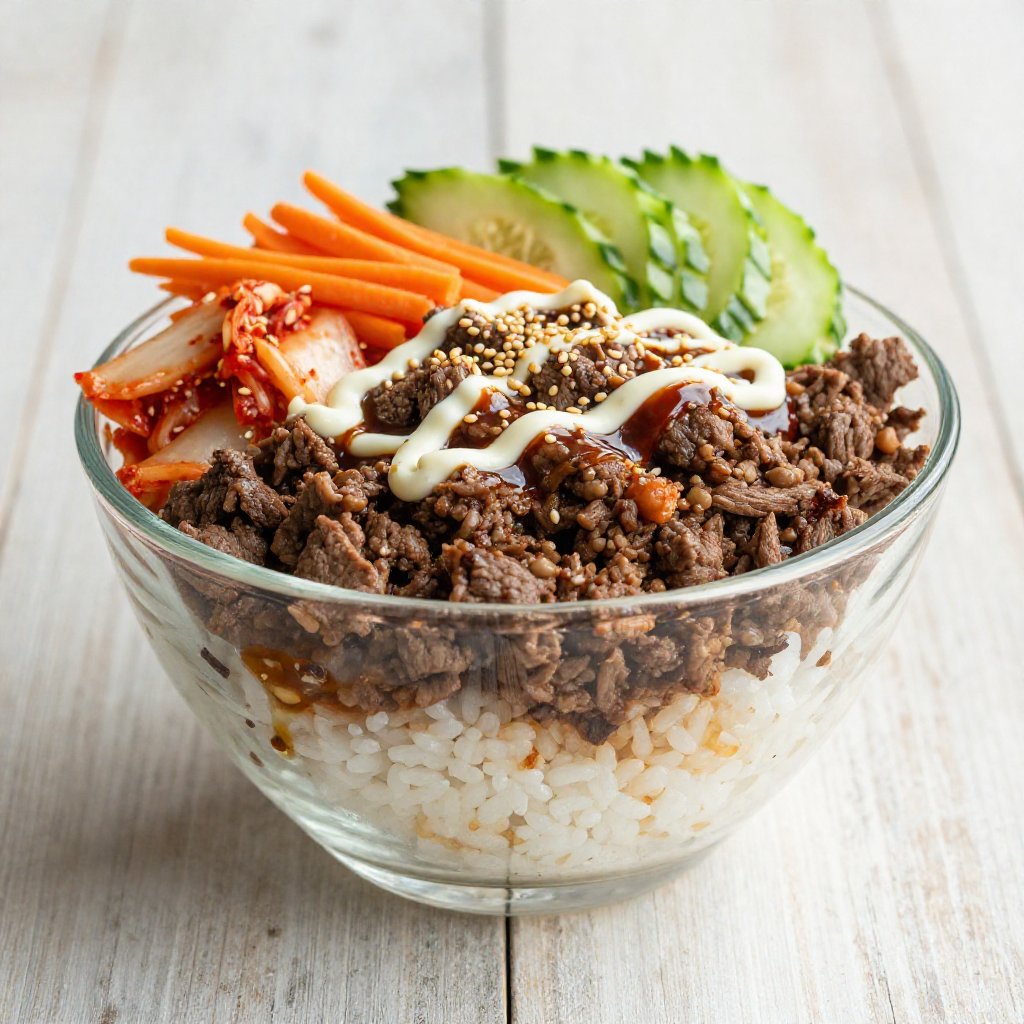
- Assemble the Bowls: Divide the cooked jasmine rice among four bowls. Top with the Korean beef mixture, a generous serving of kimchi, julienned carrot, and cucumber slices. Drizzle the gochujang mayo over the top and garnish with extra sesame seeds and spring onion. Serve immediately and savor the explosion of flavors!
Pro Tips for Culinary Excellence
These tips will elevate your Korean Beef Rice Bowls from good to exceptional:
- Quality Ingredients: Use fresh, high-quality ingredients for the best flavor. The quality of your soy sauce, sesame oil, and gochujang will significantly impact the final taste.
- Don’t Overcook the Beef: Overcooked beef can become tough and dry. Cook it just until it’s browned and slightly crispy.
- Taste as You Go: Adjust the amount of gochujang to your spice preference. Taste the sauce and the beef mixture as you cook and adjust the seasonings accordingly.
- Rice Matters: Use freshly cooked jasmine rice for the best texture and flavor. The rice should be fluffy and slightly sticky.
Common Mistakes to Avoid
Even seasoned cooks can make mistakes. Here are some common pitfalls to avoid:
- Using Too Much Gochujang: Gochujang is potent. Start with a small amount and add more to taste.
- Skipping the Fresh Ginger and Garlic: Fresh ginger and garlic are essential for the authentic Korean flavor. Don’t substitute with powdered versions.
- Overcooking the Rice: Mushy rice can ruin the texture of the bowls. Cook the rice according to package directions and avoid overcooking.
- Forgetting the Garnishes: Sesame seeds and spring onion add visual appeal and a burst of fresh flavor. Don’t skip them!
Variations: Customize Your Bowls
This recipe is a canvas for your culinary creativity. Here are some variations to try:
- Spicy Pork Bowls: Substitute the ground beef with ground pork and add an extra spoonful of gochujang for a spicier kick.
- Tofu Bowls: For a vegetarian option, use crumbled tofu instead of beef. Press the tofu to remove excess water before cooking.
- Bibimbap-Inspired Bowls: Add a fried egg on top and incorporate other traditional bibimbap vegetables like spinach, bean sprouts, and mushrooms.
- Chicken Bowls: Use ground chicken in place of beef, adjusting cooking times accordingly.
Storage: Keeping the Flavors Alive
If you have leftovers, store the Korean beef mixture and rice separately in airtight containers in the refrigerator. The beef will keep for up to 3 days, and the rice for up to 4 days. Reheat the beef in a skillet over medium heat and the rice in the microwave. Assemble the bowls just before serving to maintain the best texture and flavor.
FAQ: Your Burning Questions Answered
- Can I use a different type of rice?: While jasmine rice is traditional, you can use other types of rice like brown rice or sushi rice.
- What if I don’t have gochujang?: You can substitute it with a mixture of red pepper flakes, soy sauce, and a touch of sugar.
- Can I make this ahead of time?: Yes, you can prepare the beef mixture and rice ahead of time and assemble the bowls just before serving.
- Is this recipe gluten-free?: Use tamari instead of soy sauce to make this recipe gluten-free.
Serving Suggestions: Completing the Meal
These Korean Beef Rice Bowls are a complete meal on their own, but you can enhance the dining experience with some complementary dishes:
- Side Dishes: Serve with a side of Korean cucumber salad (oi muchim) or a bowl of miso soup.
- Beverages: Pair with a refreshing Korean barley tea or a crisp lager.
- Dessert: Finish the meal with a scoop of green tea ice cream or a slice of Korean honey cake (yakgwa).
And there you have it – a journey through the flavors of Korea, crafted with intention and care. Remember, the most important ingredient in any recipe is love. So, gather your ingredients, embrace the process, and create something truly special. Until next time, happy cooking from The Artisan’s Ledger!
Here are some related recipes you might enjoy: