
Perfect Classic Scrambled Eggs Recipe
Unlocking Stress-Free Mornings with a Breakfast Essential
As a working mom of two, I completely understand the morning scramble – and I don’t mean the eggs! Getting everyone fed, dressed, and out the door on time used to feel like a full-contact sport in our Midwest home. For years, I found myself either reaching for sugary cereals or, even worse, grabbing greasy drive-thru breakfast on the way to work, all because I thought a proper, protein-packed meal was too time-consuming. That all changed when I embraced the principles of efficient kitchen management and realized that even the simplest recipes, when mastered, can become absolute game-changers for busy weeknights and even more hectic mornings.
That’s why I’m so excited to share my go-to recipe for classic scrambled eggs. This isn’t just any egg recipe; it’s the foundation for so many quick, nutritious meals. Learning to make perfect scrambled eggs means you always have a reliable, budget-friendly option ready to go. It’s about building confidence in the kitchen and ensuring your family starts their day with something substantial, without adding a single ounce of extra stress to your already packed schedule. Think of this as your secret weapon for transforming chaotic mornings into calm, well-fed beginnings.
I often incorporate eggs into my weekly meal prep, whether it’s hard-boiled eggs for quick snacks or pre-chopped veggies ready to be tossed into a larger batch of scrambled eggs for a weekend brunch. This classic preparation is so versatile and can be scaled up easily for batch-cooking, making it perfect for those of us who appreciate having components ready to go. My goal is always to share realistic, budget-friendly meal prep plans and recipes that keep your fridge stocked, your family fed, and your evenings open for what really matters, and this simple egg recipe fits right into that philosophy.
Table of Contents
- Unlocking Stress-Free Mornings with a Breakfast Essential
- The Science Behind Perfectly Fluffy Scrambled Eggs
- Essential Ingredients for Your Scrambled Egg Masterpiece
- Your Guide to Flawless Scrambled Eggs
- Expert Tips for Scrambled Egg Perfection
- Creative Twists and Adaptations for Your Scrambled Eggs
- Frequently Asked Questions About Scrambled Eggs
- Your Journey to Breakfast Brilliance Starts Now
The Science Behind Perfectly Fluffy Scrambled Eggs
You might think scrambled eggs are just, well, scrambled eggs. But there’s a method to the madness that ensures your eggs are consistently light, creamy, and never rubbery. This particular recipe focuses on a few key techniques that elevate it from basic to truly exceptional. It’s all about understanding how heat interacts with the protein in eggs and how to manage that process for optimal texture.
Firstly, the gentle heat and continuous movement prevent the eggs from forming large, tough curds. Eggs cook quickly, and high heat can seize the proteins, making them dry and chewy. By using a medium-low setting and consistently folding the eggs, we encourage smaller, softer curds to form, resulting in that wonderfully fluffy texture we all crave. This methodical approach is the cornerstone of creating superior scrambled eggs, distinguishing them from hastily prepared versions.
Secondly, the optional addition of milk or cream plays a crucial role. While some purists argue against it, a small amount of dairy adds richness and helps to keep the eggs tender and moist. The fat in the dairy coats the egg proteins, preventing them from bonding too tightly and drying out. This step is particularly beneficial when you’re aiming for that luxurious, creamy finish, making your breakfast feel a little more decadent without extra effort. It’s a simple trick that yields significant textural rewards.
Finally, the butter isn’t just for greasing the pan; it’s an integral part of the flavor and texture profile. Melting the butter gently and swirling it to coat the pan ensures even cooking and imparts a subtle, rich flavor that complements the eggs beautifully. It also contributes to the non-stick quality, making cleanup a breeze, which is always a win in my book when I’m trying to keep things efficient in the kitchen. Every ingredient and every step in this recipe is designed to contribute to the ultimate, stress-free, and delicious scrambled egg experience.
- Achieves Perfect Texture: Using specific cooking techniques, this recipe consistently delivers eggs that are incredibly fluffy and creamy, never dry or overcooked. It’s about gentle heat and precise timing.
- Simple & Quick: With just a few basic ingredients and straightforward steps, you can whip up a fantastic breakfast in under 10 minutes, making it ideal for busy mornings or a quick meal any time.
- Versatile & Budget-Friendly: Eggs are an economical protein source, and this classic preparation serves as a perfect base for countless variations, allowing you to easily adapt it to what you have on hand.
Essential Ingredients for Your Scrambled Egg Masterpiece
One of the best things about classic scrambled eggs is how few ingredients you actually need to create something truly delicious. This recipe emphasizes quality over quantity, ensuring each component plays its part in delivering that perfect breakfast experience. You likely have most of these staples in your kitchen already, making this a go-to option for any meal, any day of the week.
When selecting your ingredients, remember that fresh, high-quality eggs will always yield the best results. I prefer large eggs for their consistent size and ease of measurement. As for the milk or cream, use what you have on hand. Whole milk will add a nice richness, while a splash of half-and-half or heavy cream will give you an even more luxurious, almost custardy texture. Even a tablespoon of water can work in a pinch to help create steam and fluffiness, though it won’t add the same creamy richness.
And let’s talk about butter. While you could use oil, butter provides an unparalleled flavor and helps achieve that golden-brown finish on the eggs. Unsalted butter allows you to control the seasoning precisely, which is always my preference. Don’t skimp on the salt and pepper; they are crucial for bringing out the natural flavors of the eggs. A good flaky sea salt at the end can also add a wonderful textural contrast.
- 2 large eggs: The star of the show! Fresh eggs are key for the best flavor and texture.
- 1 tablespoon milk or cream (optional): This is your secret weapon for extra creaminess and moisture. Use whole milk, half-and-half, or heavy cream for varying levels of richness.
- 1/2 tablespoon butter: Essential for both flavor and preventing sticking. Butter adds a subtle richness that oil simply can’t replicate.
- Salt to taste: Crucial for seasoning and enhancing the natural flavor of the eggs.
- Black pepper to taste: Adds a gentle kick and aromatic depth.
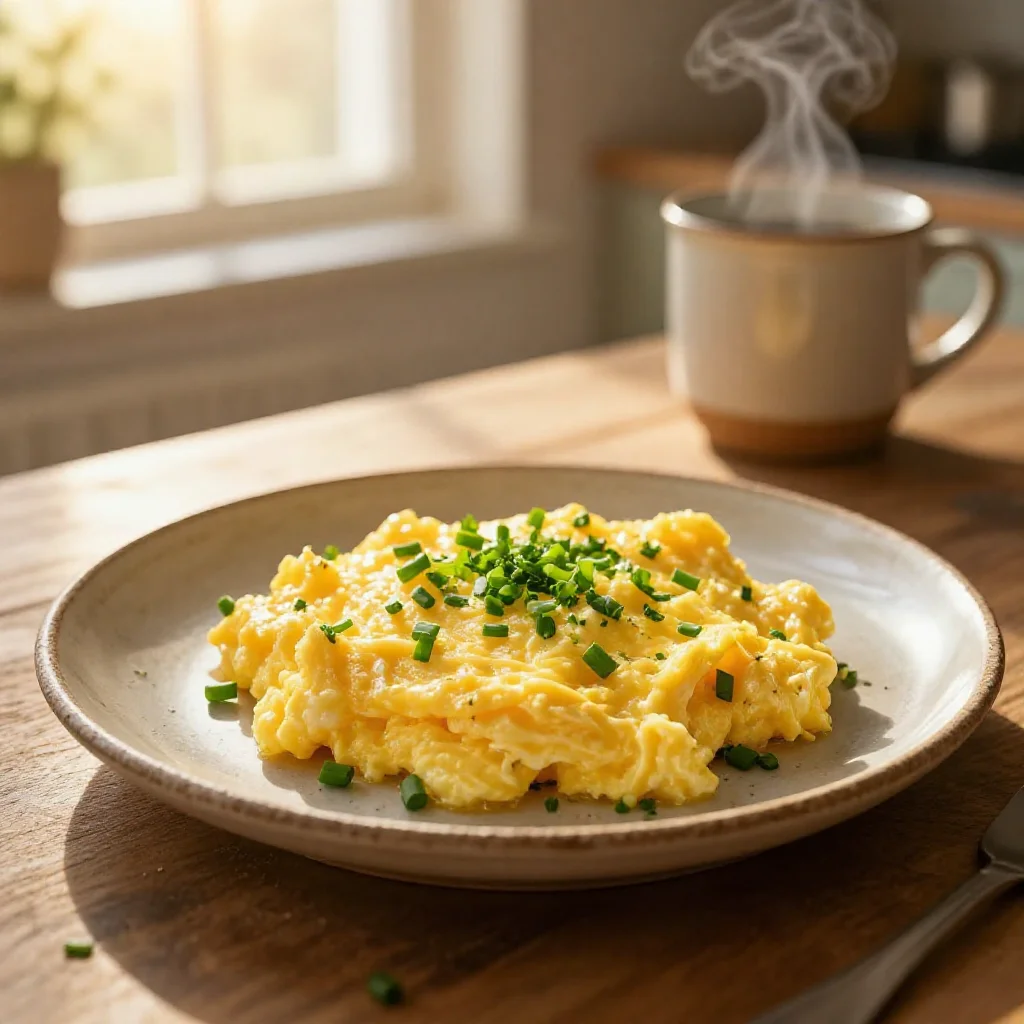
Your Guide to Flawless Scrambled Eggs
Follow these steps closely, and you’ll be serving up perfectly fluffy, creamy scrambled eggs in no time. The key is patience and paying attention to the details, especially the heat level and the movement of the eggs in the pan. This methodical approach ensures consistent results every single time, making your mornings smoother and more predictable.
Before you even crack an egg, make sure your workspace is organized. Gather all your ingredients and have your non-stick skillet and spatula ready. This kind of preparation, often called ‘mise en place,’ is a fundamental principle of efficient batch-cooking and meal prep. It minimizes frantic searching and allows you to focus solely on the cooking process, which in turn reduces stress and improves outcomes in the kitchen.
- Prepare the Eggs: Crack the 2 large eggs into a medium-sized bowl. Add the 1 tablespoon of milk or cream (if using), along with salt and black pepper to your taste. I usually start with a generous pinch of salt and a few grinds of pepper, knowing I can always adjust later.
- Whisk Vigorously: Using a fork, whisk the egg mixture vigorously. You want to combine the yolks and whites thoroughly until they are fully integrated and appear slightly frothy. This aeration is important for achieving that light and fluffy texture, introducing tiny air bubbles that expand during cooking.
- Heat the Skillet: Place a non-stick skillet over medium-low heat. This low and slow approach is critical for preventing overcooking and ensuring even coagulation of the egg proteins. Resist the urge to crank up the heat; patience here will be rewarded.
- Melt the Butter: Add the 1/2 tablespoon of butter to the heated skillet. Let it melt completely, swirling the pan to ensure the entire bottom surface is coated. The butter should be shimmering but not browning, indicating the perfect temperature for your eggs.
- Pour and Set: Pour the whisked egg mixture into the hot, buttered skillet. Let the eggs sit undisturbed for approximately 30 seconds. During this initial phase, you’ll notice the edges of the eggs starting to set and firm up. This forms the base for our gentle folding technique.
- Gently Fold: Using a heat-resistant rubber spatula, gently push the cooked edges of the eggs towards the center of the pan. As you do this, tilt the pan slightly to allow the uncooked liquid egg to flow underneath the cooked curds. Continue this gentle pushing and tilting motion, moving around the pan.
- Continue Cooking: Keep cooking and gently folding the eggs in this manner. The goal is to continue moving the eggs around the pan, creating soft, creamy curds. You want the eggs to be mostly set but still appear slightly moist and glossy. This is the crucial point for removal from heat to prevent them from becoming dry.
- Serve Immediately: As soon as the eggs reach your desired consistency – remember, they will continue to cook slightly from residual heat – remove the skillet from the heat. Serve your perfect classic scrambled eggs immediately. They are best enjoyed fresh, ensuring maximum fluffiness and flavor.
Expert Tips for Scrambled Egg Perfection
Achieving consistently perfect scrambled eggs is a skill that improves with practice, but these pro tips will give you a significant head start. These are the little secrets I’ve picked up over years of meal prepping and feeding my family, ensuring that every batch of eggs turns out exactly as it should – incredibly delicious and stress-free.
One of the biggest mistakes people make is using too high of heat. Low and slow is the mantra for scrambled eggs. High heat makes the proteins seize up too quickly, leading to dry, rubbery eggs. A medium-low heat allows for gentle, even cooking, giving you more control over the texture and preventing scorching. This also allows you to step away for a moment to grab plates or coffee without worrying about burning your breakfast. It’s all about managing your time efficiently in the kitchen.
Another crucial element is the proper whisking technique. Don’t just lightly stir the eggs; whisk them vigorously until they’re uniform in color and slightly frothy. This incorporates air, which contributes to the light and fluffy texture. This aeration, combined with the low heat, is what prevents dense, heavy scrambled eggs. Think of it as building the foundation for airiness before the cooking even begins.
Finally, know when to stop cooking. This is perhaps the most important tip. Scrambled eggs should be removed from the heat when they are still slightly moist and glossy. They will continue to cook for a minute or two from the residual heat of the pan and their own internal temperature. If you wait until they look perfectly done in the pan, they will be overcooked by the time they reach your plate. A good rule of thumb is to take them off when they still look just a tad underdone for your preference. This ensures they remain creamy and tender.
- Use a Non-Stick Skillet: A good quality non-stick pan is your best friend here. It ensures the eggs don’t stick, makes folding easier, and simplifies cleanup, which is a huge bonus for busy mornings.
- Don’t Overcrowd the Pan: If you’re making a larger batch for several people, consider using a bigger pan or cooking in two batches. Overcrowding cools the pan too quickly and can lead to unevenly cooked eggs. This is particularly important for efficient batch-cooking.
- Season at the Start: Adding salt and pepper to the raw eggs before whisking ensures the seasoning is evenly distributed throughout. This is much more effective than salting at the end, which can result in unevenly seasoned bites.
- Serve Immediately: Scrambled eggs are best enjoyed fresh off the stove. Their delicate texture and creamy consistency diminish as they sit, so have your plates ready and serve them as soon as they’re done.
Creative Twists and Adaptations for Your Scrambled Eggs
While the classic scrambled egg recipe is perfect on its own, it also serves as an excellent canvas for customization. This is where you can truly make the dish your own, adapting it to your family’s preferences or whatever ingredients you have on hand from your weekly meal prep. The beauty of this recipe lies in its flexibility, making it a budget-friendly option that never gets boring.
For those mornings when you want a little more substance or flavor, consider adding some vegetables. Finely diced bell peppers, onions, spinach, or mushrooms can be sautéed in the pan before you add the eggs. This not only boosts the nutritional value but also adds fantastic textures and flavors. If you’ve pre-chopped veggies for other meals as part of your tupperware system, this is a perfect way to use them up efficiently.
Cheese is another fantastic addition. A sprinkle of shredded cheddar, Monterey Jack, or a crumbly feta cheese can be folded into the eggs during the last minute of cooking, allowing it to melt into gooey perfection. For a bit of spice, a dash of hot sauce or a pinch of red pepper flakes can awaken your palate. And don’t forget herbs! Fresh chives, parsley, or dill, finely chopped and stirred in at the end, add a burst of freshness and color.
If you’re looking to make a more substantial meal, especially for a weekend brunch, scrambled eggs pair wonderfully with other breakfast favorites. Serve them alongside a slice of toast, some crispy bacon or sausage, or even as a topping for avocado toast. For a truly hearty breakfast, you could even consider making a hearty breakfast casserole with a similar flavor profile. And if you’re feeling adventurous and want to try something different, consider pairing them with fluffy Japanese pancakes or even a classic pancake recipe. For those special occasions, a festive mimosa bar could complete your brunch setup.
Frequently Asked Questions About Scrambled Eggs
I get a lot of questions about making scrambled eggs, especially from other busy parents trying to streamline their kitchen routines. It’s natural to have queries about achieving the best results, so I’ve put together answers to some of the most common ones. Understanding these aspects will help you troubleshoot any issues and confidently produce perfect scrambled eggs every time.
From the right pan to the best way to store leftovers, knowing the ins and outs can make a significant difference in your cooking experience. Remember, the goal is always to make meal preparation as stress-free and efficient as possible, and that includes getting comfortable with the basics. Don’t hesitate to experiment and find what works best for your specific kitchen setup and family’s taste preferences.
What’s the best pan for scrambled eggs?
A non-stick skillet is undeniably the best choice for scrambled eggs. Its surface prevents the eggs from adhering, making it easier to fold them gently and ensures cleanup is a breeze. While cast iron can work, it requires more fat and careful temperature management to prevent sticking and achieve the same creamy texture.
Can I make scrambled eggs ahead of time for meal prep?
While scrambled eggs are best eaten immediately, you can certainly prepare them slightly ahead of time. Cook them until they are just set but still very moist, then transfer to an airtight tupperware container. Reheat gently in the microwave or on the stove with a tiny bit of milk or water to help rehydrate. They won’t be quite as fluffy as fresh, but they’re still a perfectly viable and budget-friendly option for quick weekday mornings when you’re prioritizing efficiency.
What’s the difference between fluffy and creamy scrambled eggs?
Fluffy scrambled eggs are typically achieved by incorporating more air during whisking and cooking them quickly over slightly higher heat (though still not high). They have larger, distinct curds. Creamy scrambled eggs, on the other hand, are cooked slower over lower heat with more constant stirring, resulting in smaller, very soft curds and a velvety texture, often enhanced by milk or cream. This recipe aims for a balance, delivering both fluffiness and a rich, creamy consistency.
Why are my scrambled eggs rubbery?
Rubbery scrambled eggs are almost always a result of overcooking or cooking at too high a temperature. When eggs are exposed to excessive heat or cooked for too long, the proteins tighten up excessively, squeezing out moisture and resulting in a dry, firm, and unpleasant texture. To avoid this, always use medium-low heat and remove the eggs from the pan when they are still slightly moist and glossy, allowing residual heat to complete the cooking process.
Your Journey to Breakfast Brilliance Starts Now
There you have it – the definitive guide to mastering classic scrambled eggs. This isn’t just a recipe; it’s a fundamental building block for anyone looking to bring more efficiency and deliciousness into their kitchen, especially those of us balancing busy lives. From my Midwest kitchen to yours, I genuinely hope this detailed approach helps you achieve consistently perfect results, transforming your mornings into a more calm and well-fed experience.
Remember, the goal of meal prepping and intentional cooking is to make your life easier, not harder. By perfecting simple, budget-friendly staples like these scrambled eggs, you’re not just making breakfast; you’re investing in a more stress-free week. This quick and easy method ensures you have a reliable protein source ready in minutes, whether it’s for a solo breakfast, a family meal, or an added component to your larger meal prep strategy. It’s all about working smarter, not harder.
So, go ahead and give this recipe a try this week. Grab those eggs, heat that skillet, and prepare to be amazed at how simple it is to create something truly exceptional. I promise, once you master this technique, you’ll wonder how you ever started your day without these perfectly fluffy, creamy scrambled eggs. Happy cooking, and here’s to many more stress-free, delicious mornings!

Classic Scrambled Eggs
Ingredients
Method
- Crack the eggs into a medium bowl.
- Add milk or cream (if using), salt, and pepper.
- Whisk the mixture vigorously with a fork until the yolks and whites are fully combined and slightly frothy.
- Heat a non-stick skillet over medium-low heat.
- Add the butter to the skillet and let it melt, swirling to coat the bottom.
- Pour the egg mixture into the hot skillet.
- Let the eggs sit undisturbed for about 30 seconds until the edges begin to set.
- Gently push the cooked edges towards the center with a spatula, tilting the pan to allow uncooked egg to flow underneath.
- Continue to cook and gently fold the eggs until they are mostly set but still slightly moist. Do not overcook.
- Remove from heat and serve immediately.
Notes
Loved this recipe? Save it to your favorite Pinterest board so you can easily find it later! ✨
